
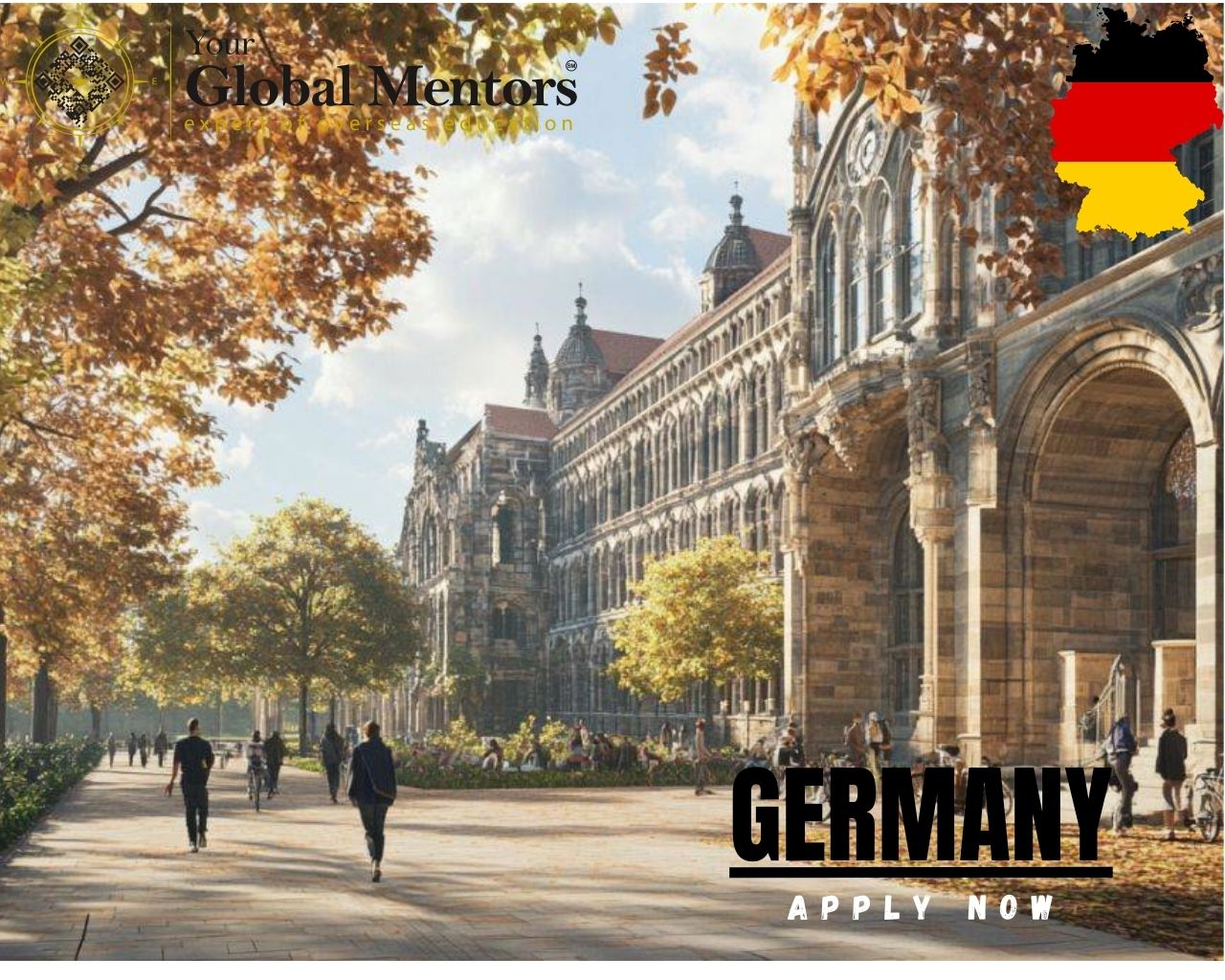
Why Study in Germany?
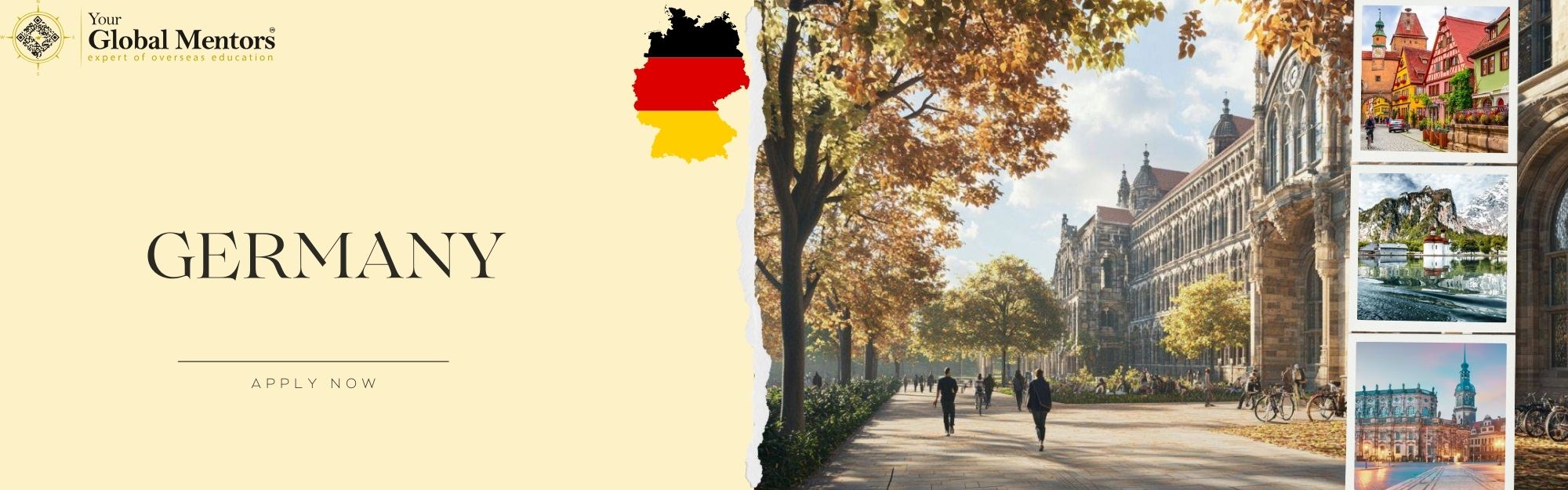
Germany stands as one of the world's most respected and sought-after study destinations, attracting over 400,000 international students every year. For Indian students looking to study in Germany, the country offers an extraordinary combination of tuition-free or low-cost public university education, globally recognized degrees, a thriving economy, and one of Europe's strongest job markets. Study in Germany and you invest in a future that is academically excellent, professionally rewarding, and personally transformative.
Overview
of Germany as a Study Destination
Germany is home to more than 400 accredited higher education institutions,
including world-renowned research universities, universities of applied
sciences (Fachhochschulen), and technical universities. The German higher
education system is regulated by the Standing Conference of the Ministers of
Education and Cultural Affairs (KMK), ensuring consistent quality and
international academic recognition. Cities like Munich, Berlin, Hamburg,
Frankfurt, and Stuttgart are not only economic powerhouses but also vibrant
student hubs with thriving international communities.
Academic
Excellence
German universities consistently rank among the best in the world. Institutions
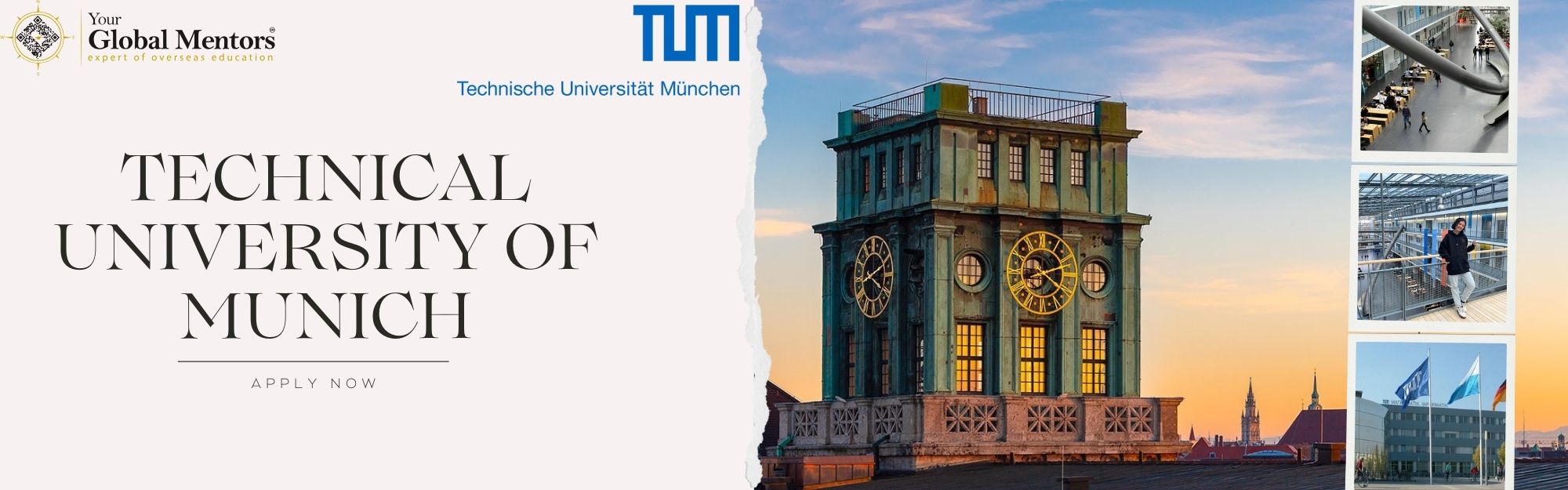
such as the Technical University of Munich (TUM), Ludwig Maximilian University
of Munich (LMU), Heidelberg University, and Humboldt University of Berlin
regularly feature in global top-100 rankings. Germany's emphasis on
research-driven education, industry collaboration, and practical application
makes its graduates highly competitive in the global job market. The country
spends over 3% of its GDP on research and development, one of the highest rates in the world.
Affordable
Tuition Fees
One of the most compelling reasons to study in Germany is the cost, or
rather, the near absence of it. Most public universities in Germany charge no
tuition fees for both domestic and international students, regardless of
nationality. Students typically pay a semester contribution fee of €150-€350 per semester, which often includes a public transport pass for the city.
This makes higher education in Germany among the most affordable in the entire
world for international students, including those from India.
International
Student Environment
Germany welcomes more international students than any other
non-English-speaking country in the world. With over 400,000 international
students currently enrolled, Germany's campuses are genuinely diverse and
multicultural. Indian students form one of the largest international student
communities in Germany, with over 42,000 Indian students enrolled as of 2023, a number that continues to grow year on year.
Recognition
of Degrees Worldwide
Degrees from German universities are globally recognized and respected by
employers, academic institutions, and professional licensing bodies across the
world. As a member of the European Union and a signatory to the Bologna
Process, Germany ensures that its higher education qualifications are fully
compatible with European academic standards and recognized across all 27 EU
member states.
Ready to begin your journey to study in Germany? Contact Your Global Mentors today for expert guidance on university selection, applications, and visa processing.
Facts About Germany
1. Capital
Berlin is Germany’s capital and largest city, with 3.7 million residents.
2. Official language
German is the sole official language, spoken by 95% of the population.
3. Population
Germany has 84 million people, making it the most populous EU member state.
4. Government
It is a federal parliamentary republic with 16 states.
5. Economy
Germany has the largest economy in Europe and the 3rd largest in the world by GDP.
6. Reunification
East and West Germany were reunified on October 3, 1990, after 45 years, by GDP.
7. Autobahn
Germany’s highway network has sections with no general speed limit, unique among major nations.
8. Beer culture
Germany hosts over 1500 breweries and the world-famous Oktoberfest in Munich.
9. Inventions
Germans invented the printing press (Gutenberg), the automobile(Benz), and aspirin (Bayer).
10. Nobel Prizes
Germany has produced over 100 Nobel laureates, one of the highest counts in the world.
Living cost
|
Expense |
Average Cost (EUR/Month) |
Cost (INR/Month)* |
|
Rent (Student Housing/Shared Flat) |
€350–€700 |
38,497.20 - 76,989.50 |
|
Food & Groceries |
€150–€250 |
16,497.75 - 27,496.25 |
|
Public Transport |
€30–€60 |
3,299.28 - 6,598.56 |
|
Health Insurance |
€140–€150 |
15,396.78 - 16,496.55 |
|
Internet & Mobile |
€20–€40 |
2,199.68 - 4,399.36 |
|
Personal Expenses |
€100–€200 |
10,998.40 - 21,995.60 |
|
Total Estimated Monthly Cost |
€790–€1,400 |
86,882.62 - 1,53,969.20 |
Rent (Accommodation)
Rent is usually the biggest expense for students in Germany. The cost depends on the city and the type of accommodation. Student dormitories are generally the most affordable option, while private apartments are more expensive. Many international students choose shared apartments (WGs) to reduce housing costs and meet other students.
Food & Groceries
Students typically spend money on groceries, daily meals, and occasional dining out. Supermarkets in Germany offer affordable food options, and cooking at home can significantly reduce monthly expenses. International students can also find a wide variety of international food products in major cities.
Public Transport
Germany has an excellent public transportation network, including buses, trams, metro systems, and regional trains. Many universities provide semester tickets or student discounts, making travel convenient and affordable. Public transport is often the preferred mode of travel for students.
Health Insurance
Health insurance is mandatory for all students studying in Germany. It provides access to medical consultations, hospital treatment, and other healthcare services. Students must have valid health insurance to enroll at a university and obtain a residence permit.
Internet & Mobile
Students need internet access for online classes, research, assignments, and communication. Monthly expenses generally include mobile phone plans and internet services. Germany offers a variety of affordable prepaid and contract-based mobile packages for students.
Personal Expenses
Personal expenses include clothing, toiletries, entertainment, fitness memberships, study materials, and leisure activities. These costs vary according to lifestyle and spending habits. Budget-conscious students can keep these expenses relatively low.
Total Monthly Living Cost
On average, international students in Germany spend between €790 and €1,400 per month on living expenses. The actual amount depends on the city, accommodation type, and personal lifestyle.
*Note: All the costs mentioned are estimates and are subject to change.
Benefits of Studying in Germany
Choosing to study in Germany is one of the most strategically sound decisions an Indian student can make for their academic and professional future. Germany's unique combination of world-class education, zero tuition fees, a robust economy, and strong post-study work rights creates an unparalleled study abroad proposition.
Quality
Education
Germany's higher
education system is internationally celebrated for its rigorous academic
standards, research excellence, and strong industry integration. German
universities offer a distinctive educational philosophy that balances
theoretical knowledge with practical application, producing graduates who are
immediately job-ready. The country is home to over 100 universities of applied
sciences that maintain direct partnerships with leading corporations, including
BMW, Siemens, Bosch, SAP, and Deutsche Bank.
EU-Recognized
Degrees
A degree from a German university carries full recognition across all 27 EU
member states under the Bologna Process. For Indian students, this means that a
qualification earned from a German institution opens career doors not just in
Germany but across the entire European continent, a significant advantage in
today's globally mobile job market.
Cultural
Diversity
Germany is one of the
most culturally diverse nations in Europe. Its universities are home to
students from over 180 countries, creating a rich multicultural learning
environment. Indian students will find a welcoming community, with
well-established Indian student associations, cultural festivals, and Indian
restaurants and grocery stores in virtually every major German university city.
Safety and
Student-Friendly Environment
Germany consistently ranks among the safest countries in the world. Its cities
feature excellent public infrastructure, efficient healthcare, reliable law
enforcement, and strong consumer protections. The German government actively
supports international students through well-funded student services that provide affordable housing, counselling, and legal assistance on every
university campus.
Travel
Opportunities Across Europe
Germany's central location in Europe makes it an ideal base for exploring the
continent. With the €49 Deutschlandticket for domestic travel and budget
airlines operating from major German airports, students can easily visit
neighbouring countries, including France, the Netherlands, Austria, Switzerland,
Poland, and beyond during semester breaks.
Research
and Innovation Opportunities
Germany is a global leader in research and innovation, investing over €100
billion annually in R&D. International students have access to world-class
research facilities, funded research assistantships (Hiwi positions), and
collaboration opportunities with Germany's renowned Fraunhofer Institutes, Max
Planck Society, and Helmholtz Association, organizations that drive
cutting-edge global research in science, technology, and engineering.
Studying in Germany opens doors to a truly world-class academic and professional experience. Reach out to Your Global Mentors today to explore programs that match your goals.
No scholarships available right now.
Program Duration in Germany
Before you commit to studying in Germany, understanding how academic programs are structured will help you plan your timeline, finances, and career trajectory effectively. German universities follow the European Bologna framework, offering internationally standardized qualification levels.
Bachelor's
Programs (3-4 Years)
Bachelor's degree programs in Germany typically span 6 to 8 semesters (3 to 4
years) and award 180 to 240 ECTS credits. Engineering and science programs are
often 4 years, while business, social sciences, and humanities programs may be
completed in 3 years. An increasing number of bachelor's programs are now
offered in English, particularly at universities of applied sciences, making
Germany more accessible for Indian students who may not yet be proficient in
German.
Master's
Programs (1.5-2 Years)
Master's programs in Germany typically require 2 to 4 semesters (1 to 2 years)
of full-time study and award 60 to 120 ECTS credits. Germany is particularly
popular for Master's programs in engineering, computer science, data science,
business, and natural sciences. Many of these programs are offered entirely in
English and are free of tuition at public universities, an extraordinary value
for international students.
MBA
Programs (1-2 Years)
Germany is home to several highly regarded business schools offering
internationally accredited MBA programs. Institutions like Mannheim Business
School, WHU Otto Beisheim School of Management, and HHL Leipzig Graduate School
of Management offer full-time MBA programs lasting 12 to 18 months. Executive
and part-time MBA formats extend to 2 years. German MBAs provide strong
industry connections and excellent post-graduation employment prospects.
PhD
Programs (3-5 Years)
Doctoral programs in Germany typically span 3 to 5 years and are available
across all major disciplines. Germany's PhD programs are distinctively
structured, often involving direct supervision within a research group or
institute rather than coursework-heavy programs. Many PhD positions in Germany
are paid as research assistants or employment contracts, providing students with
a salary while they complete their doctoral research, a major financial
advantage.
Academic
Intake Periods
German universities operate on two primary intake periods:
Let Your Global Mentors guide you through Germany's application timelines, university selection, and intake planning. Contact our advisors today for a personalized roadmap.
Work Opportunities in Germany
Work opportunities in Germany are among the strongest in Europe, and they represent one of the most compelling reasons for Indian students to study in Germany. Germany's economy, the largest in Europe and the third largest in the world, generates consistent, high-quality employment across a wide range of sectors.
International students in Germany are permitted to work 120 full days or 240 half days per year without requiring a separate work permit. This translates to approximately 20 hours per week during the academic term, enabling students to gain valuable German work experience while supplementing their living costs. With a minimum wage of €12.41 per hour, part-time work is a financially meaningful supplement to student budgets.
A. Most Demanded Careers in Germany
IT and
Software Development
Germany faces a
chronic shortage of IT professionals, with an estimated 137,000 unfilled tech
positions as of 2023. Software engineers, full-stack developers, cybersecurity
experts, DevOps engineers, and cloud architects are in exceptional demand
across Germany's thriving tech ecosystem in Berlin, Munich, and Hamburg.
Engineering
Germany is the
birthplace of modern engineering and remains a global leader in mechanical,
automotive, electrical, and civil engineering. Companies including Volkswagen,
Daimler, Siemens, and ThyssenKrupp actively recruit international engineering
graduates, making Germany one of the best countries in the world for
engineering career prospects.
Business
and Finance
Frankfurt, Germany's
financial capital, is home to the European Central Bank and hundreds of
international financial institutions. Business analysts, investment bankers,
compliance professionals, management consultants, and finance controllers are
in consistent demand across Germany's corporate landscape.
Healthcare
Germany's ageing
population and well-funded public healthcare system create sustained demand for
doctors, nurses, dentists, pharmacists, and allied health professionals.
Medical and nursing graduates from German universities carry EU-wide
professional recognition, offering broad career mobility across Europe.
Logistics
and Supply Chain
Germany is Europe's
largest logistics market, driven by its central geographic position,
world-class infrastructure, and export-oriented industrial economy. Supply
chain managers, logistics coordinators, freight specialists, and warehouse
operations professionals are in strong and consistent demand.
Data
Science and Artificial Intelligence
Germany's federal
government has committed €5 billion to AI development through its national AI
strategy (KI-Strategie). Data scientists, machine learning engineers, AI
researchers, and business intelligence specialists are increasingly sought
after across Germany's manufacturing, automotive, financial, and healthcare
sectors.
B. Popular Courses in Germany
Students who choose to study in Germany have access to a wide range of world-class programs aligned with the country's strongest employment sectors:
Computer
Science
Germany's computer
science programs are globally respected, combining theoretical rigor with
practical industry application. Graduates are in exceptional demand across all
sectors of Germany's digital economy.
Engineering
Mechanical,
electrical, civil, automotive, and aerospace engineering programs at German
technical universities (TU Berlin, TU Munich, RWTH Aachen) are among the best
in the world. EU-wide professional recognition and direct industry partnerships
provide outstanding career pathways.
Business
Management
One of the most
popular disciplines for Indian students in Germany, covering strategy,
international management, marketing, operations, and entrepreneurship. Programs
at Mannheim, Frankfurt School, and LMU carry particular global prestige.
Finance
and Accounting
Aligned with CFA,
ACCA, and CPA Global standards. Frankfurt's status as Europe's financial
capital creates exceptional internship and employment opportunities for finance
graduates directly from campus.
Medicine
Germany's medical
programs are rigorous, EU-accredited, and internationally recognized. Admission
is competitive, and programs are primarily taught in German, making German
language proficiency essential for medical aspirants.
Hospitality
and Tourism
Germany's thriving
tourism, events, and hospitality industry supports strong demand for graduates
in hospitality management, event management, and tourism studies. Programs at
institutions in Munich and Berlin offer direct industry exposure.
Artificial
Intelligence
Rapidly expanding AI
and machine learning programs at Germany's leading technical universities are
attracting globally mobile students seeking careers at the intersection of
technology and innovation. Germany's AI National Strategy ensures strong
industry demand for graduates in this field.
Contact Your Global Mentors today to identify the right program and career pathway aligned with Germany's most in-demand sectors.
Frequently Asked Questions (FAQs)
Q1. Are
scholarships available for international students in Germany?
Yes. Scholarships in
Germany are widely available through the German Academic Exchange Service
(DAAD), one of the world's largest scholarship organizations, offering grants
for study, research, and language programs. Additional scholarships are available
through the Heinrich Böll Foundation, Friedrich Ebert Foundation,
Konrad-Adenauer-Stiftung, and individual university scholarship programs.
Q2. Are
programs in Germany taught in English?
Yes. The number of
English-taught programs in Germany has grown significantly, with over 1,900
English-medium programs currently available across German universities. Most
Master's programs in engineering, computer science, data science, business, and
international relations are offered in English. Bachelor's programs are
predominantly taught in German, though an increasing number of English-medium
undergraduate options are becoming available, particularly at universities of
applied sciences.
Q3. What
are the post-study work opportunities in Germany?
Germany offers one of the most generous post-study work arrangements in Europe.
After completing their degree, international graduates can apply for an
18-month job-seeking residence permit, allowing them to remain in Germany and
search for employment related to their qualification. Once employed, graduates
can transition to a standard work and residence permit. Germany's new
Chancenkarte (Opportunity Card) also provides additional pathways for skilled
international graduates to enter the German job market.
Q4. What
are the intake periods for universities in Germany?
German universities operate two primary intake periods. The Winter Semester
begins in October and is the main intake, with applications typically open from
January to July. The Summer Semester begins in April and serves as a secondary
intake, with applications accepted from October to January. Not all programs
are available at both intakes, so it is essential to verify program-specific
deadlines early. Your Global Mentors recommend beginning the application
process at least 8-10 months before your intended start date.
Q5. What
are the employment prospects after studying in Germany?
Employment prospects for graduates who study in Germany are among the
strongest in Europe. Germany's chronic shortage of skilled workers, with over
2 million unfilled positions across key sectors, creates exceptional demand
for qualified international graduates, particularly in IT, engineering,
healthcare, data science, and business management. EU-recognized German degrees
give graduates the right to seek employment across all 27 EU member states.
Germany's skilled immigration law (Fachkräfteeinwanderungsgesetz),
significantly expanded in 2023, further streamlines employment pathways for
international graduates.
Your Global Mentors is a trusted study abroad consultancy dedicated to helping Indian students achieve their international education goals. From shortlisting universities and preparing applications to visa processing, scholarship guidance, and pre-departure support, we are with you at every step. If you are ready to study in Germany and build a world-class career, contact Your Global Mentors today for a free expert consultation.