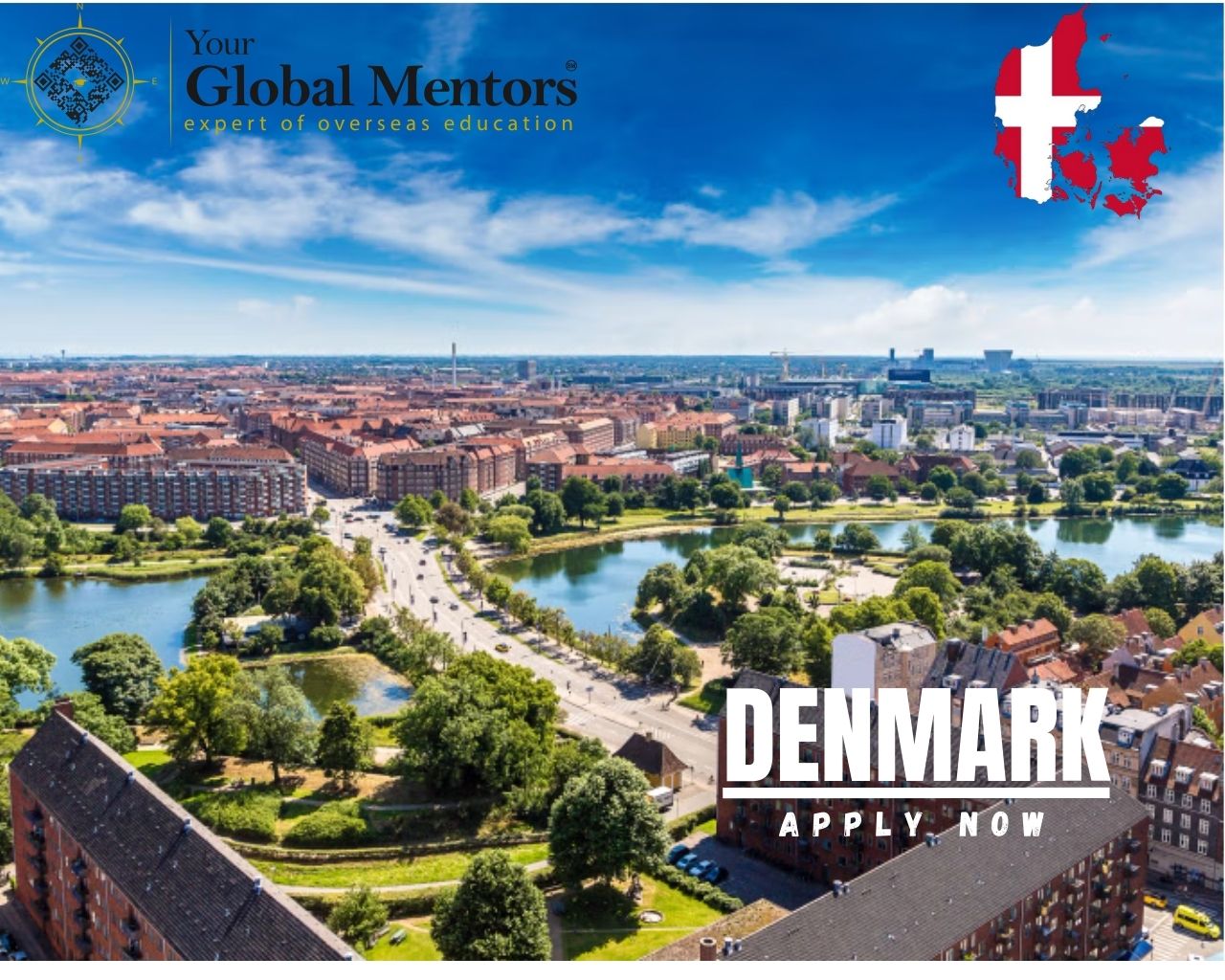
Why Study in Denmark?
If you're searching for a European study destination that delivers world-class education, a generous post-study work permit, and a genuinely welcoming environment for Indian students, Denmark deserves to be at the very top of your list. In 2026-2027, the opportunity to study in Denmark has reached a compelling new high, driven by a 3-year post-study work permit, over 700 English-taught programs, and a stable, student-friendly policy environment at a time when other major destinations are tightening their rules.
Denmark is home to globally respected institutions, including the University of Copenhagen, the Technical University of Denmark (DTU), Aarhus University, Aalborg University, the University of Southern Denmark (SDU), and Copenhagen Business School (CBS), ranked globally in the top 15 in Business and Management. Danish universities are built on Problem-Based Learning (PBL), where students work in teams to solve real-world industry challenges, producing graduates who are genuinely job-ready from day one rather than theory-heavy.
For Indian students concerned about language, nearly 86% of Danes speak fluent English, making social and professional integration remarkably smooth. Academic excellence here is matched by strong industry connections. Danish institutions actively partner with global companies like Novo Nordisk, Maersk, and LEGO to ensure students gain real-world exposure alongside their degree.
Tuition fees for non-EU/EEA students at Danish public universities range from € 6,000 to € 20,000 per year, which is significantly lower than equivalent programs in the US, UK, or Australia, making affordable education in Denmark a realistic proposition for ambitious Indian families. Degrees earned when you study in Denmark are recognized across Europe, the UK, Canada, Australia, and the USA, opening doors globally for graduates regardless of which sector or country they pursue next.
Ready to explore Denmark as your next academic home? Connect with Your Global Mentors today for expert, personalized guidance on how to study in Denmark in 2026-2027.
Facts About Denmark
Living Costs in Denmark
|
Expense Category |
Monthly Cost (DKK) |
Monthly Cost (EUR) |
Monthly Cost (INR) |
|
Accommodation- Student Dormitory |
DKK 2,500 - 3,500 |
€335 - €470 |
₹35,800 - ₹50,120 |
|
Food & Groceries |
DKK 1,500 - 2,500 |
€201 - €335 |
₹21,480 - ₹35,800 |
|
Transportation |
DKK 300 - 500 |
€40 - €67 |
₹4,296 - ₹7,160 |
|
Health Insurance |
Free |
Free |
Free |
|
Mobile & Internet |
DKK 150 - 250 |
€20 - €34 |
₹2,148 - ₹3,580 |
|
Study Materials & Books |
DKK 300 - 500 |
€40 - €67 |
₹4,296 - ₹7,160 |
|
Personal & Miscellaneous |
DKK 500 - 800 |
€67 - €107 |
₹7,160 - ₹11,456 |
|
Total expenses in a month |
DKK 5250 - 8050 |
€703 - 1080 |
₹75,180 - ₹1,15,276 |
Here's a concise explanation for each cost category:
1. Accommodation - Student Dormitory (DKK 2,500-3,500 | €335-€470 | ₹35,800-₹50,120)
Accommodation is the biggest monthly expense for students in Denmark. Student dormitories managed by non-profit housing foundations are the most affordable option, offering fully furnished rooms with shared kitchen and bathroom facilities. Costs vary by city; Copenhagen is the most expensive, while Aalborg and Odense are significantly cheaper. Apply for student housing immediately after receiving your offer letter, as waitlists can be long, especially in Copenhagen.
2. Food and Groceries (DKK 1,500-2,500 | €201-€335 | ₹21,480-₹35,800)
Food costs are highly manageable with smart choices. Budget supermarkets like Netto, Lidl, and REMA 1000 offer affordable everyday groceries. University canteens provide subsidized hot meals at student-friendly prices. Cooking at home regularly keeps costs toward the lower end of this range, while eating out at restaurants, where a casual meal costs DKK 120-200 per person, pushes costs significantly higher. Indian groceries are available at Asian supermarkets in major cities.
3. Transportation (DKK 300-500 | €40-€67 | ₹4,296-₹7,160)
Transportation is one of the most affordable categories in Denmark, largely because cycling is free, culturally normal, and practically supported by world-class cycling infrastructure across all major cities. Students who cycle daily spend very little on transport. Those who use public transport can purchase subsidized student monthly passes, while the Rejsekort travel card offers pay-as-you-go convenience with automatic discounts over single tickets.
4. Health Insurance (Free)
This is Denmark's biggest financial advantage for international students. All legal residents holding a valid Danish residence permit receive a yellow health insurance card giving free access to Denmark's full public healthcare system, including GP visits, hospital treatment, emergency care, and specialist referrals. Compared to countries like the US or Australia, where student health insurance costs ₹25,000-₹42,000/month, this is an enormous saving. A small private travel insurance policy is advisable only during the first few weeks before your residence registration is complete.
5. Mobile and Internet (DKK 150-250 | €20-€34 | ₹2,148-₹3,580)
Denmark has excellent mobile and broadband infrastructure. Affordable SIM-only plans from providers like Lebara, Oister, and Telmore start from DKK 49-79/month. Campus Wi-Fi is free and fast at all Danish universities. Many student dormitories include free broadband internet in the housing package; always check before purchasing a separate plan to avoid paying for something already included in your rent.
6. Study Materials and Books (DKK 300-500 | €40-€67 | ₹4,296-₹7,160)
Study material costs are kept low because Danish universities provide free access to textbooks, journals, e-books, and digital databases through university libraries. Most courses rely on digital reading packs shared through the university's online learning system. First-year students may need to purchase a few core textbooks initially, but active use of library resources and second-hand textbook markets on student Facebook groups quickly reduces this cost in subsequent semesters.
7. Personal and Miscellaneous (DKK 500-800 | €67-€107 | ₹7,160-₹11,456)
This flexible category covers toiletries, clothing, leisure, subscriptions, and social activities. The most important first-year advice here is to budget a one-time amount of DKK 1,000-2,000 for warm winter clothing and gear. Denmark's cold winters require proper investment that doesn't need to be repeated annually. Student discount cards (StudieCard) reduce costs on cinema, gyms, and dining. Many universities also provide free access to Microsoft Office, Adobe Suite, and other software; always check before paying for these independently.
Total: DKK 5,250-8,050/month (€703-€1,080 | ₹75,180-₹1,15,276)
The gap between the lower and upper ends comes down to four decisions: which city you choose, whether you live in a dormitory or private apartment, how often you cook versus eat out, and whether you use your part-time work allowance (90 hours/month) to offset living expenses. Students who make smart choices across all four areas can live very comfortably at the lower end of this range.
*Note: All the costs mentioned are estimates and are subject to change.
Want a personalized budget plan for your study in Denmark journey? Get in touch with Your Global Mentors today.
Benefits of Studying in Denmark
Choosing to study in Denmark in 2026-2027 is one of the smartest academic investments an Indian student can make, and the benefits go far beyond a prestigious degree on your CV.
Quality education is the bedrock of the Danish academic experience. The Danish education system is built on principles of project-based and problem-solving learning styles; students work in groups to solve real-life case studies, collaborate with companies on projects, and engage in critical thinking, a sharp contrast to the theory-heavy models many Indian students are used to. This approach produces graduates who are immediately employable and highly valued by international employers.
Denmark is a full EU member state, and degrees earned here are fully EU-recognized, carrying weight across all 27 EU member countries and well beyond. Institutions like DTU, Aarhus University, and the University of Copenhagen maintain bilateral agreements with universities and research bodies worldwide, ensuring that a degree earned when you study in Denmark is respected on every continent.
Cultural diversity on Danish campuses is growing steadily, with students from across Asia, Africa, and Europe creating a genuinely international academic community. Indian students in particular find a welcoming network through active Indian student associations at major universities.
Safety and a student-friendly environment are defining features of life in Denmark. The country consistently ranks among the world's lowest for crime and corruption, and Danish universities maintain dedicated international student offices offering academic guidance, housing support, and mental health resources.
Denmark's central location in Northern Europe makes travel opportunities excellent; direct rail and flight connections put Germany, Sweden, Norway, and the Netherlands within easy reach for weekend exploration during semester breaks.
In 2026, Denmark's focus has intensified on sectors like Green Energy, Life Sciences, and Digital Tech, with institutions partnering with global giants to give students cutting-edge research and innovation exposure directly tied to real industry demand.
Curious how these benefits translate to your specific academic and career goals? Connect with Your Global Mentors for a free personalized consultation on your study in Denmark journey.
No universities listed for Denmark yet.
No scholarships available right now.
Program Duration in Denmark
Understanding how long each program takes is a critical part of planning your study in Denmark journey, shaping your financial planning, visa timelines, and long-term career strategy.
Bachelor's programs in Denmark typically run for 3 years, covering disciplines including engineering, computer science, business, and humanities. On average, undergraduate programs cost between DKK 45,000 and DKK 120,000 per year for non-EU/EEA students. Many Bachelor's programs include mandatory industry internships, ensuring graduates enter the job market with real professional experience already behind them.
Master's programs are generally 2 years in duration and are the most popular entry point for Indian students who choose to study in Denmark. Master's programs range from DKK 45,000 to DKK 160,000 per year, depending on the institution and field. Master's in Denmark in engineering, computer science, sustainability, and business administration are particularly in demand, with strong links to Danish industry and research institutions.
MBA programs are offered primarily at Copenhagen Business School and select private institutions, typically spanning 1 to 2 years. CBS's MBA is globally ranked and exceptionally well-connected to Danish and international corporate networks, offering a strong return on investment for business-focused students.
PhD programs in Denmark often come with funding or stipends, particularly at public universities, making doctoral study in Denmark financially accessible for high-achieving international researchers. PhD programs often include stipends or tuition waivers at public universities, making advanced research study here considerably more affordable than in the UK or the USA.
Academic intake periods in Denmark follow two main cycles: a primary September/Autumn intake, which is the most popular among international students and carries the widest program availability, and a secondary February/Spring intake available at select institutions. For the Spring 2027 intake, the portal opens on 15 August 2026, with a deadline of September 1, 2026.
Not sure which program length or intake fits your personal goals? Let Your Global Mentors map out the right academic pathway for your studies in Denmark.
Work Opportunities in Denmark
Denmark's advanced, innovation-driven economy creates genuinely strong work opportunities in Denmark for both students and graduates, particularly in technical, healthcare, and sustainability-focused sectors.
IT and Software Development is Denmark's fastest-growing professional field, with the government actively investing in digital infrastructure and tech sector expansion. Software developers, cybersecurity specialists, and UX designers are among the highest-demand roles, and graduates who study in Denmark in IT-related disciplines step into a thriving, well-remunerated market.
Engineering professionals, particularly in wind energy, biomedical engineering, and advanced manufacturing, are consistently in high demand. Denmark is a global leader in renewable energy, with companies like Vestas and Ørsted actively recruiting engineering graduates from Danish universities.
Business and Finance roles are abundant in Copenhagen and Aarhus, where a dense cluster of international companies, financial services firms, and Danish multinationals actively seek skilled graduates with global perspectives and business qualifications.
Healthcare professionals face some of the strongest demand in Denmark's labour market, driven by an aging population and sustained government investment in healthcare infrastructure. Nursing, medicine, and healthcare administration graduates find consistent employment opportunities.
Logistics and Supply Chain careers benefit from Denmark's position as a major global maritime and trade hub home to Maersk, one of the world's largest shipping companies, creating high-value openings in supply chain management and international freight.
Data Science and AI are among the most rapidly expanding fields, with Danish universities and companies investing heavily in AI, big data, and machine learning, creating strong post-study work opportunities in Denmark for analytically skilled graduates.
A residence permit for job seeking gives graduates the right to work up to 20 hours per week and full-time through June, July, and August, giving graduates a meaningful window to find full-time employment.
Want to align your course choice with Denmark's real job market demand? Speak with Your Global Mentors to plan your career pathway strategically.
B. Popular Courses to Study in Denmark
Choosing the right course is the single most important factor in making your studies in Denmark a success. Certain disciplines stand out consistently for their quality, industry alignment, and graduate employment outcomes.
Computer Science programs at DTU and Aalborg University are globally respected, with a strong emphasis on practical problem-solving and direct ties to Denmark's growing tech ecosystem. Almost all Master's programs and many Bachelor's programs are taught fully in English, making Computer Science highly accessible for Indian students.
Engineering, spanning mechanical, civil, electrical, biomedical, and wind energy disciplines, is a cornerstone strength of Denmark's higher education system. DTU's engineering programs in particular are internationally recognized for research output and industry integration with companies like Vestas, Novo Nordisk, and Maersk.
Business Management programs at Copenhagen Business School attract significant numbers of international students in Denmark, with CBS ranked globally in the top 15 for Business and Management Studies (QS 2026). Strong corporate networks and mandatory internships make CBS graduates immediately employable.
Finance and Accounting courses benefit from Copenhagen's role as a major Scandinavian financial center, giving students exposure to international banking, investment management, and the growing Nordic fintech ecosystem.
Medicine programs in Denmark are highly competitive and among the most rigorous in Europe. While they require strong academic credentials and Danish language proficiency at the undergraduate level, medical degrees from Danish institutions are EU-recognized and globally respected.
Hospitality and Tourism is a growing field, supported by Denmark's booming tourism industry and internationally renowned food culture, with Copenhagen consistently ranking among Europe's top culinary destinations.
Artificial Intelligence is an emerging priority, with dedicated Master's tracks now available at DTU and Aarhus University, directly aligned with Denmark's national digital strategy and growing AI investment across major industries.
Not sure which course best matches your ambitions? Let Your Global Mentors help you shortlist the perfect program to study in Denmark in 2026-2027.
Frequently Asked Questions (FAQs) - Study in Denmark
1. Do
Indian students need a student visa to study in Denmark?
Denmark does not issue a traditional student visa. As non-EU citizens, Indian
students apply for a student residence permit through SIRI, the Danish Agency
for International Recruitment and Integration. From 2026, enrollment at a
SIRI-approved state institution is mandatory to qualify for the permit. The
visa fee in 2026 is approximately DKK 2,115 (₹30,287), with processing times of
60–90 days.
2. Are
there English-taught programs in Denmark?
Yes. Denmark offers over 700 programs taught in English across its
universities, covering engineering, business, computer science, sustainability,
and more, making it one of Europe's most English-friendly study destinations
for Indian students.
3. Can
international students take up part-time jobs in Denmark?
Yes. With a student residence permit, students can work up to 90 hours per
month during the academic year and full-time during June, July, and August.
Exceeding this limit can put your residence permit at risk, so tracking working
hours carefully is essential.
4. Are
there post-study work opportunities in Denmark?
Graduates from accredited Danish universities, whether at the bachelor's,
master's, or PhD level, are now eligible to stay and seek employment for up to
three years after completing their studies. This 3-year job-seeking permit is
one of the most generous post-study provisions in all of Europe.
5. When
are the academic intake periods in Denmark?
The primary intake is September, with a smaller February intake available at
select institutions. For the Spring 2027 intake, the application portal opens
on 15 August 2026, with a deadline of September 1, 2026. Master's applicants
targeting September 2027 should begin shortlisting programs and preparing
documents from late 2026.
Have more questions about eligibility, admissions, scholarships, or the residence permit process? Connect with Your Global Mentors for complete, personalized, end-to-end guidance on your journey to study in Denmark in 2026-2027.