




MBA Colleges in Austria Fees, Rankings, and Career Opportunities
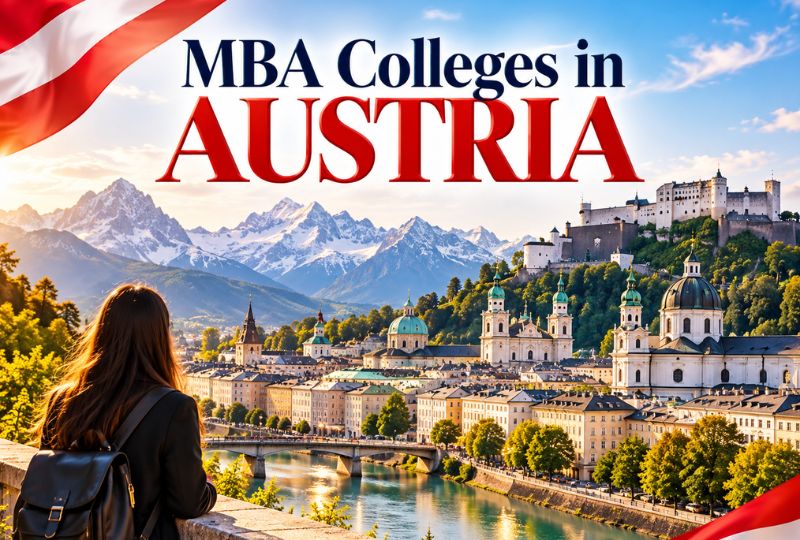
Table of Contents
MBA Colleges in Austria: Highlights 2026
Austria offers a range of MBA and Executive MBA programs through universities and business schools, particularly in Vienna and other major academic centres.
International business education
Many Austrian MBA programs are designed for international students and experienced professionals looking for European management education.
English-taught programs
Several MBA programs are taught in English, although language requirements vary by university and course.
Strong executive MBA options
Austria is particularly known for Executive MBA programs aimed at professionals with several years of work experience.
Multiple specialisations
Students can find MBA pathways in General Management, Finance, Healthcare, Digital Transformation, Entrepreneurship and Sustainable Management.
European career exposure
Studying in Austria provides access to the wider European business environment and multinational companies operating across Central Europe.
Why Study an MBA in Austria?
Austria combines internationally oriented education, a Central European location and a strong business environment.
Central European location
Austria provides convenient access to major European business markets, including Germany, Switzerland, Italy and Central and Eastern Europe.
International learning environment
MBA classrooms often include professionals and students from different countries and industries.
Focus on practical management.
Programs commonly use case studies, projects, leadership development and real-world business applications.
English-medium opportunities
International students can find several MBA programs taught fully in English, reducing the need for German at the admission stage for those programs.
Career and networking exposure
MBA students can build professional networks through classmates, faculty, corporate events and international business connections.
Eligibility Criteria for MBA Colleges in Austria
MBA eligibility varies significantly by institution, particularly between regular MBA and Executive MBA programs.
Bachelor's degree required
Most programs require a recognised undergraduate degree, commonly equivalent to at least 180 ECTS or a three-year bachelor's qualification.
Work experience is important.
Many Austrian MBA programs target professionals. Depending on the institution, applicants may need around 3 to 5 years of professional experience.
Leadership experience may be preferred.
Executive MBA programs may give preference to candidates with managerial, supervisory or leadership responsibilities.
English proficiency
Applicants to English-taught programs need to demonstrate sufficient English proficiency through recognised tests or previous English-medium education, depending on university rules.
Academic and professional profile
Admission committees may also consider career progression, motivation, professional achievements and overall applicant profile.
Admission Process for MBA in Austria 2026
The MBA admission process in Austria generally involves online application, document review and an interview.
Step 1: Shortlist MBA programs
Compare universities based on course structure, work-experience requirements, specialisations, tuition fees and teaching language.
Step 2: Check eligibility
Confirm bachelor's degree requirements, professional experience and English-language criteria.
Step 3: Prepare application documents
Applicants generally submit academic transcripts, degree certificates, CV, motivation letter, passport and English-language proof.
Step 4: Submit the online application
Applications are usually completed directly through the university or business school's admission portal.
Step 5: Attend an interview
Many MBA schools assess shortlisted candidates through an admissions interview focusing on motivation, experience and career objectives.
Step 6: Accept the offer
Successful applicants complete admission formalities, pay the required fees and begin visa or residence-permit procedures where applicable.
Entrance Exams Required for MBA in Austria
Standardised test requirements for Austrian MBA programs vary by institution and are often different from those used by traditional US business schools.
GMAT is not universally compulsory
Many MBA and Executive MBA programs in Austria focus more on academic background, professional experience and interviews than on mandatory GMAT scores.
GRE may also be optional
GRE requirements are institution-specific and are not universally required for Austrian MBA admission.
Professional experience can carry significant weight
Executive MBA programs often place greater emphasis on management experience, leadership exposure and career progression.
English-language tests may be required.
IELTS, TOEFL, PTE or other accepted English tests may be required for English-taught programs if applicants cannot demonstrate sufficient proficiency through previous education.
University-specific assessment
Some institutions evaluate applicants through interviews and application review instead of relying on a standardised management entrance exam.
Check individual requirements
Applicants should confirm the exact 2026 admission criteria of each shortlisted MBA because test, language and work-experience requirements can differ considerably.
Bilkul — same style, same depth aur without resource links:
English Language Requirements for MBA in Austria
Most MBA programs in Austria that are taught in English require applicants to demonstrate sufficient English-language proficiency.
IELTS is commonly accepted
Many universities accept IELTS Academic scores, with required bands varying by institution and program.
TOEFL is widely recognised
TOEFL iBT is another common option for international students applying to English-taught MBA programs.
Other English tests may be accepted.
Some institutions may also accept PTE, Cambridge English or other recognised language qualifications.
Previous English-medium education can help
Applicants who completed their previous degree fully in English may sometimes receive a waiver, depending on university policy.
Requirements vary by program.
Executive MBA and professional MBA programs may assess English through interviews, previous education and application documents instead of relying only on test scores.
Top MBA Colleges in Austria 2026
Austria has several recognised universities and business schools offering MBA and Executive MBA programs.
WU Executive Academy
WU Vienna is one of the best-known business education institutions in Austria and offers several Executive MBA pathways.
MCI – Management Centre Innsbruck
MCI offers professionally oriented MBA programs with a focus on management, leadership and practical business education.
MODUL University Vienna
MODUL University provides internationally focused management education with emphasis on sustainability, entrepreneurship and business development.
Webster Vienna Private University
Webster Vienna offers an American-style MBA curriculum within an international university environment.
FHWien der WKW
FHWien provides professional and executive management programs designed for working professionals.
Best MBA Universities in Austria for International Students
International students can choose from several Austrian universities offering English-taught and globally oriented MBA programs.
WU Executive Academy
Suitable for experienced professionals looking for executive-level business education and international exposure.
MODUL University Vienna
A good option for students seeking an English-medium and internationally diverse learning environment.
Webster Vienna Private University
Offers an American-style curriculum and an international student community in Vienna.
MCI Innsbruck
Provides practical management education with strong links to industry and professional development.
FHWien der WKW
Offers career-focused programs with an emphasis on applied learning and business practice.
Compare program structure carefully.
International students should review work-experience requirements, fees, specialisations, delivery format and career goals before selecting a university.
Popular MBA Specialisations in Austria
Austrian MBA programs offer several specialisations designed around modern business and leadership requirements.
General Management
Covers strategy, leadership, finance, marketing, operations and organisational management.
Finance
Focuses on corporate finance, investment, financial strategy and managerial decision-making.
Digital Transformation
Prepares students for technology-driven business models, innovation, automation and digital strategy.
International Management
Focuses on global business, cross-cultural management and international market strategy.
Entrepreneurship
Designed for students interested in startups, innovation, business creation and growth strategy.
Sustainability Management
Combines business leadership with environmental, social and sustainable-development considerations.
Healthcare Management
Some institutions also offer management pathways linked to healthcare administration and health-sector leadership.
MBA Fees in Austria
MBA tuition fees in Austria vary significantly depending on the university, program format and level of executive experience targeted.
Premium Executive MBA programs
Leading executive programs can cost approximately €40,000 to €65,000 or more.
Mid-range MBA programs
Many private and professionally oriented MBA programs fall in the range of around €20,000 to €35,000.
More affordable alternatives
Some universities and professional institutions offer lower-cost management programs depending on the course structure and delivery format.
Specialised MBA programs
Finance, Digital Transformation, Healthcare or Executive Leadership programs may have different fee structures.
Additional living expenses
Students should also budget for accommodation, food, health insurance, transportation, residence permits and personal expenses in addition to tuition.
Affordable MBA Colleges in Austria
Austria offers some comparatively affordable MBA and management-study options, although costs vary significantly between public institutions and private executive business schools.
Public-university alternatives
Public universities can offer lower-cost management or business master's programs compared with premium Executive MBA programs.
MCI Innsbruck
MCI offers professionally oriented management programs at a lower fee level than some premium executive business schools.
MODUL University Vienna
MODUL offers internationally focused business programs with tuition generally below top-end Executive MBA pricing.
FHWien der WKW
FHWien provides professionally oriented business education and can be considered by students looking for practical management programs.
Compare MBA with related management degrees.
Students focused on affordability should also compare specialised Master's programs in Management, International Business or Finance with traditional MBA programs.
Cost of Living for MBA Students in Austria
Living expenses in Austria depend on the city, accommodation type and personal lifestyle.
Average monthly cost
International students should budget approximately €1,300 per month for overall living expenses.
Accommodation
Student housing or shared accommodation may cost around €450–€700 per month, with Vienna generally more expensive than smaller cities.
Food expenses
Students may spend approximately €300 per month on groceries and meals, depending on lifestyle.
Transport and personal expenses
Transportation, study materials, recreation and other personal costs can add approximately €500 per month.
Annual living budget
A practical annual budget can therefore reach approximately €15,000–€16,000 or more, excluding tuition fees.
Scholarships for MBA in Austria
MBA students in Austria can explore university scholarships, partial tuition waivers and other funding opportunities.
University-specific scholarships
Some business schools offer partial scholarships based on financial need, professional profile and academic merit.
WU Executive Academy scholarships
WU Executive Academy offers partial scholarships for selected MBA and Executive MBA programs, with some awards covering up to around 25% of tuition fees.
Merit-based funding
Strong academic performance, career achievements, leadership experience and professional potential may improve scholarship chances.
Need-based assistance
Certain institutions also consider the applicant's financial situation while awarding tuition support.
External funding
Students can explore government, foundation, employer-sponsored and international scholarship opportunities in addition to university funding.
MBA Colleges in Austria for Indian Students
Indian students can apply to several Austrian universities and business schools offering English-taught MBA and Executive MBA programs.
WU Executive Academy
Suitable for experienced professionals looking for internationally oriented Executive MBA education in Vienna.
MCI Innsbruck
Offers practical management education and can appeal to international students seeking professionally oriented programs.
MODUL University Vienna
Provides English-medium business education in an international university environment.
Webster Vienna Private University
Offers an American-style business curriculum and attracts students from different countries.
FHWien der WKW
Provides applied management and executive education with a strong professional orientation.
English-taught options
Many international MBA programs do not require German for admission, although German can be useful for daily life and employment.
Documents Required for MBA Admission in Austria
International applicants generally need academic, professional and language-related documents when applying to MBA programs in Austria.
Academic documents
Applicants typically submit bachelor's degree certificates and academic transcripts.
Curriculum Vitae
A detailed CV showing education, employment history and professional achievements is commonly required.
Proof of work experience
Many MBA and especially Executive MBA programs require documents confirming professional and managerial experience.
English-language proof
IELTS, TOEFL or another recognised English qualification may be required if previous education was not completed in English.
Statement of motivation
Applicants may need to submit a motivation letter explaining career goals and reasons for choosing the MBA.
Passport and photograph
A valid passport and recent passport-size photographs are generally required for international applications.
Additional residence documents
Indian students applying for an Austrian student residence permit may also need proof of sufficient funds, accommodation, health insurance and other immigration-related documents. For 2026, Austria's financial-proof requirements differ by age and other circumstances, so students should check the current residence rules before applying.
Bilkul — same style, same depth aur without resource links:
MBA Placements in Austria
MBA placements in Austria depend on the university, prior work experience, German-language ability, specialisation and the strength of the student’s professional network.
Career support instead of Indian-style campus placements
Austrian MBA programs generally rely more on career services, networking, employer events and individual job applications than on a single centralised campus-placement system.
Executive MBA students often already have experience
Many Austrian MBA programs are designed for working professionals, so graduates may use the degree for promotion, leadership transitions or switching industries.
Strong sectors for MBA graduates
Opportunities are available in consulting, finance, technology, manufacturing, logistics, healthcare and international business.
Internships and networking matter
Corporate projects, alumni networks, professional events and internships can play an important role in securing employment.
German can improve opportunities.
Although many multinational roles use English, German proficiency can considerably broaden the range of jobs available in Austria.
Average MBA Salary in Austria
Salary after an MBA in Austria varies significantly according to experience, industry, position and employer.
Experienced MBA graduates
Professionals with several years of prior work experience can often target managerial and specialist positions with stronger compensation than entry-level graduates.
Typical management roles
Many business and management professionals may earn approximately €50,000–€80,000 per year, depending on experience and job function.
Senior and specialised roles
Experienced professionals in consulting, finance, technology or senior management can earn €80,000–€100,000 or more.
Salary varies by location.ion
Vienna generally offers the largest concentration of corporate and international business opportunities, although salaries and living costs can also be higher.
Experience influences salary strongly .ngly
For MBA graduates, previous professional experience, leadership exposure, language skills and industry expertise can be as important as the degree itself.
Top Recruiters for MBA Graduates in Austria
MBA graduates in Austria can find opportunities with Austrian corporations, multinational companies, consulting firms and financial institutions.
Consulting and professional services
Companies such as Deloitte, PwC, EY and KPMG recruit business professionals across consulting, advisory and finance functions.
Banking and financial services
Organisations such as Erste Group, Raiffeisen Bank International and other financial institutions provide opportunities in finance, strategy and business management.
Technology and industrial companies
Large technology, engineering and manufacturing businesses recruit professionals for strategy, operations, project management and business development.
Consumer and multinational companies
International companies operating in Vienna and other Austrian cities recruit MBA graduates for marketing, finance, supply chain and management positions.
Startups and growing businesses
Austria’s startup ecosystem can also provide roles in business development, strategy, product management and entrepreneurship.
Student Visa & Residence Permit for MBA Students
Non-EU/EEA students planning to study in Austria for more than six months generally need the appropriate Austrian residence permit for students.
Residence Permit – Student
International students admitted to an eligible Austrian higher-education institution generally apply for a Residence Permit – Student rather than relying only on a short-term visa.
Proof of financial resources
For 2026, student subsistence requirements are €722.58 per month for students under 24 and €1,308.39 per month for students aged 24 or older, subject to the detailed residence-permit calculation rules.
Health insurance and accommodation
Applicants must generally demonstrate suitable health-insurance coverage and accommodation in Austria as part of the residence process.
Working while studying
Third-country students can generally receive an employment permit for work of up to 20 hours per week without a labour-market test; the employer applies for the permit, and the job must not interfere with studies.
Post-study stay
After completing an eligible Austrian degree, third-country graduates can extend their student residence permit once for 12 months to look for employment or start a business.
Career Opportunities After an MBA in Austria
An MBA in Austria can open career pathways across international business, consulting, finance, technology and industrial management.
Management Consulting
Graduates can pursue careers in strategy, business transformation, operations and management advisory.
Finance and Banking
Opportunities exist in corporate finance, banking, financial analysis, risk management and investment-related functions.
International Business
Austria’s location in Central Europe supports careers involving international markets, cross-border operations and regional business development.
Technology and Digital Transformation
MBA graduates can work in technology management, digital strategy, business transformation and product-related roles.
Operations and Supply Chain
Austria's manufacturing and logistics sectors create opportunities in operations, procurement and supply-chain management.
Entrepreneurship
Graduates interested in starting businesses can also use the MBA for business planning, financing, strategy and growth management.
FAQs About MBA Colleges in Austria
Is Austria good for MBA students?
Austria offers internationally oriented MBA programs, strong European business exposure and opportunities across Vienna and other commercial centres.
Is GMAT compulsory for MBA admission?
Not always. Many Austrian MBA and Executive MBA programs evaluate applicants through academic background, professional experience and interviews instead.
Is German required for MBA admission?
For English-taught programs, German is often not required for admission. However, German can significantly improve local employment opportunities.
How much does an MBA in Austria cost?
MBA tuition can range from around €20,000–€35,000 for many professional programs to €40,000–€65,000 or more for premium Executive MBA programs.
Can international students work while studying?
Eligible third-country students can generally obtain permission to work up to 20 hours per week, subject to Austrian employment rules.
Can students stay in Austria after an MBA?
Eligible graduates can extend their student residence permit for 12 months after graduation to search for a suitable job or start a business. Migration.gv.at
What are popular MBA specialisations in Austria?
General Management, Finance, Digital Transformation, International Management, Entrepreneurship, Sustainability and Healthcare Management are common areas.
Conclusion
Austria can be a strong destination for professionals seeking European MBA education with international business exposure.
International MBA environment
Students can choose from English-taught MBA and Executive MBA programs designed for global professionals.
Strong European location
Austria's central location provides access to business opportunities across Western, Central and Eastern Europe.
Multiple career pathways
Graduates can pursue careers in Consulting, Finance, Technology, Operations, International Business and Entrepreneurship.
Work experience adds significant value.
Many Austrian MBA programs are designed for professionals, making previous industry and leadership experience important for both admission and career outcomes.
Post-study opportunities are available.
Eligible international graduates can remain in Austria for up to 12 months after completing their studies to seek employment or establish a business, subject to residence requirements.