




Best MBBS Colleges in Russia for Indian Students 2026: Fees, Eligibility, and Top NMC Universities

Table of Contents
MBA in the Netherlands for International Students: Highlights 2026
The Netherlands is a popular European destination for international MBA students because of its English-taught programs, global business environment and strong international career exposure.
English-taught MBA programs
Many leading Dutch business schools offer MBA programs fully in English, making them accessible to international students.
International business environment
The Netherlands is home to multinational companies across technology, finance, logistics, consumer goods and consulting.
Career-focused education
MBA programs often include case studies, consulting projects, leadership development and practical business assignments.
Strong global connectivity
Students benefit from the Netherlands’ location within Europe and its close connections with major international business markets.
Innovation-driven learning
Dutch MBA programs often focus on entrepreneurship, digital transformation, sustainability and responsible leadership.
Why Study an MBA in the Netherlands as an International Student?
The Netherlands offers a strong combination of quality business education, international exposure and access to a competitive European job market.
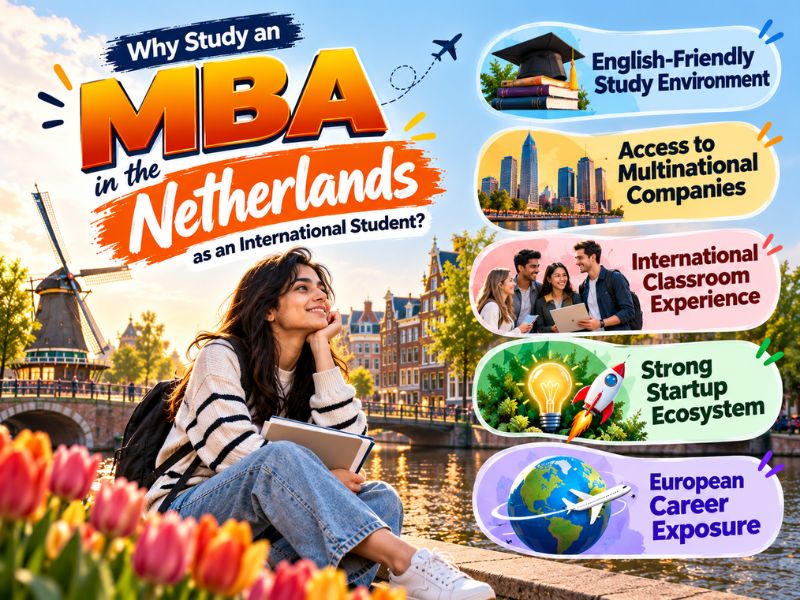
English-friendly study environment
English is widely used in higher education and in many international workplaces across the Netherlands.
Access to multinational companies
Students can explore career opportunities with global employers operating in Amsterdam, Rotterdam and other business hubs.
International classroom experience
MBA cohorts often include students from multiple countries, industries and professional backgrounds.
Strong startup ecosystem
The Netherlands has a growing startup and innovation environment, making it attractive for students interested in entrepreneurship and technology.
European career exposure
An MBA in the Netherlands can help students build networks and professional experience within the broader European business ecosystem.
Benefits of Pursuing an MBA in the Netherlands
An MBA in the Netherlands can provide both professional and international advantages for students and experienced professionals.
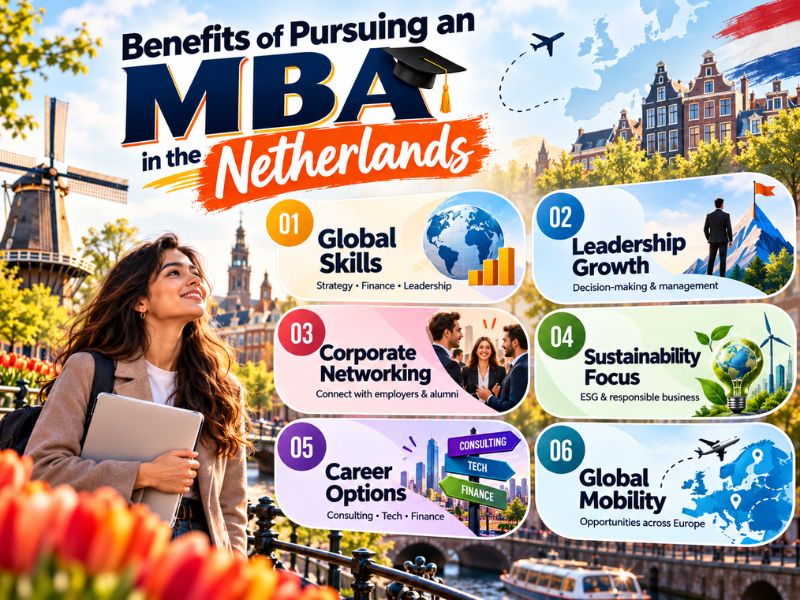
Globally relevant management skills
Students develop skills in strategy, finance, marketing, leadership and business decision-making.
Strong leadership development
MBA programs focus on communication, team management, problem-solving and strategic thinking.
Corporate networking opportunities
Students can connect with employers, alumni, industry experts and fellow professionals through business school events.
Focus on sustainability
Many Dutch MBA programs place strong emphasis on ESG, responsible business and sustainable management.
Opportunities in multiple industries
Graduates can explore roles in Consulting, Finance, Technology, Marketing, Logistics and International Business.
International career mobility
The multicultural environment can help students build experience relevant to careers across Europe and other global markets.
MBA in the Netherlands Eligibility Criteria
MBA eligibility requirements vary by business school, but most institutions consider academic background, professional experience and English proficiency.
Bachelor’s degree required
Applicants generally need a recognised undergraduate degree or an equivalent qualification.
Professional experience
Many MBA programs prefer or require around 3 years or more of professional work experience.
Strong academic profile
Universities assess previous academic performance and the applicant’s overall readiness for postgraduate business education.
English-language proficiency
International students may need IELTS, TOEFL or another recognised English-language qualification.
Leadership potential
Admissions teams often consider career progression, managerial responsibilities, professional achievements and future goals.
MBA Admission Requirements for International Students
International MBA applicants generally need to submit academic, professional and personal documents as part of the admission process.
Academic transcripts
Official bachelor’s degree certificates and academic transcripts are usually required.
Professional CV
Applicants should provide an updated CV highlighting work experience, responsibilities and achievements.
Statement of Purpose or essays
Business schools may ask students to explain their career goals, leadership experience and reasons for choosing the MBA.
GMAT or GRE
Some MBA programs require or consider GMAT or GRE scores, while others may offer waivers or alternative assessments.
English-language test
IELTS, TOEFL, PTE or another accepted test may be required unless the applicant qualifies for an exemption.
Letters of Recommendation
Professional or academic recommendations may be requested depending on the institution.
Admission interview
Shortlisted applicants may need to attend an interview or video assessment to evaluate communication skills, motivation and program fit.
Passport and supporting documents
International students also need a valid passport and additional documents for enrolment and immigration formalities.
Bilkul — same style, same depth aur without resource links:
MBA Admission Process in the Netherlands 2026
The MBA admission process in the Netherlands generally includes program selection, eligibility checks, document submission, test scores and an admission interview.
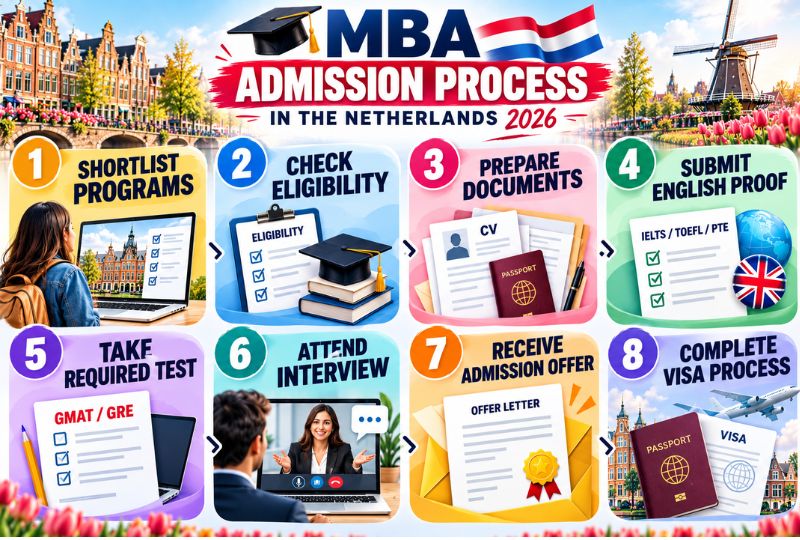
Step 1: Shortlist MBA programs
Compare business schools based on tuition fees, course duration, specialisations, work-experience requirements and career outcomes.
Step 2: Check eligibility
Review the academic, professional and English-language requirements of each shortlisted institution.
Step 3: Prepare application documents
Applicants generally need degree certificates, academic transcripts, an updated CV, passport, motivation essays and references.
Step 4: Submit English-language proof
Provide IELTS, TOEFL, PTE or another accepted English-language qualification if required.
Step 5: Submit GMAT/GRE or alternative test
Some MBA programs may require GMAT, GRE, Executive Assessment or another approved admissions test.
Step 6: Attend the admission interview
Shortlisted candidates may be invited for an interview or video assessment to evaluate motivation, communication and leadership potential.
Step 7: Receive the admission offer
Successful applicants receive an offer letter with further instructions regarding tuition deposit and enrolment.
Step 8: Complete immigration formalities
International students then proceed with the applicable Dutch visa and residence-permit process.
Entrance Exams Required for MBA in the Netherlands
MBA entrance-exam requirements vary depending on the business school and type of program.

GMAT
GMAT is commonly accepted by competitive MBA programs and may be used to assess quantitative and analytical ability.
GRE
Some business schools accept GRE as an alternative to GMAT.
Executive Assessment
Certain Executive MBA or experienced-professional programs may accept the Executive Assessment.
University-specific tests
Some institutions may use their own admissions assessment instead of GMAT or GRE.
Test waivers may be available
Candidates with strong academic records, significant work experience or professional qualifications may qualify for a waiver at selected institutions.
Check program-specific requirements
Not every MBA in the Netherlands requires the same entrance test, so students should review each program separately.
English Language Requirements for MBA in the Netherlands
International students applying to English-taught MBA programs generally need to demonstrate strong English-language proficiency.
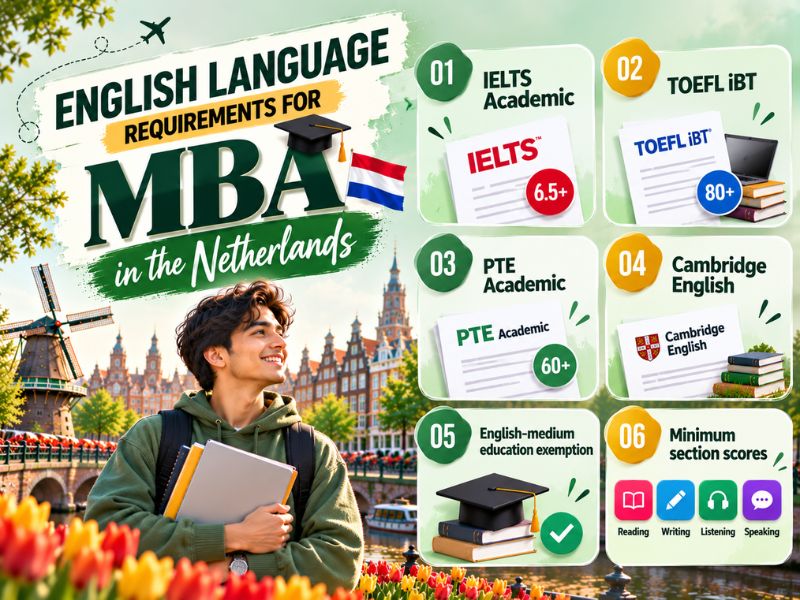
IELTS Academic
IELTS is widely accepted, with minimum score requirements varying by institution.
TOEFL iBT
TOEFL is another commonly accepted English-language test for MBA applicants.
PTE Academic
Some Dutch universities and business schools may also accept PTE Academic.
Cambridge English
Selected institutions may recognise Cambridge English qualifications as proof of proficiency.
English-medium education exemption
Applicants who completed previous education entirely in English may sometimes be exempt from submitting an English test.
Minimum section scores
Some institutions may specify minimum Reading, Writing, Listening and Speaking scores in addition to the overall score.
Top MBA Colleges in the Netherlands 2026
The Netherlands has several recognised business schools offering internationally focused MBA and Executive MBA programs.
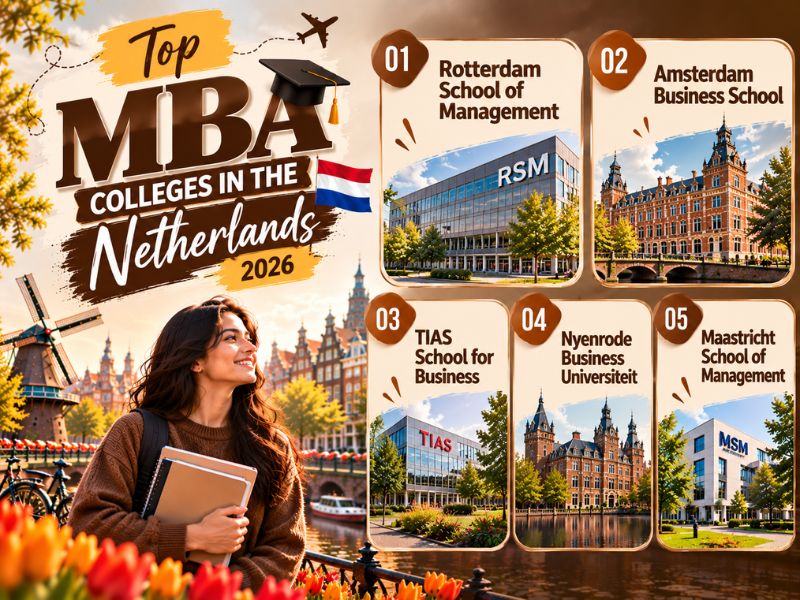
Rotterdam School of Management, Erasmus University
RSM is one of the country’s best-known business schools and offers internationally oriented MBA and Executive MBA programs.
Amsterdam Business School
Part of the University of Amsterdam, it offers strong exposure to finance, strategy, international business and management.
TIAS School for Business and Society
TIAS provides MBA and executive education with emphasis on leadership, responsible business and practical management.
Nyenrode Business Universiteit
Nyenrode is known for its business-focused education, leadership development and strong corporate network.
Maastricht School of Management
MSM has a long-standing international orientation and attracts professionals from diverse countries and industries.
Best Universities for MBA in Netherlands
The best university for an MBA depends on factors such as career goals, professional experience, budget and preferred learning format.
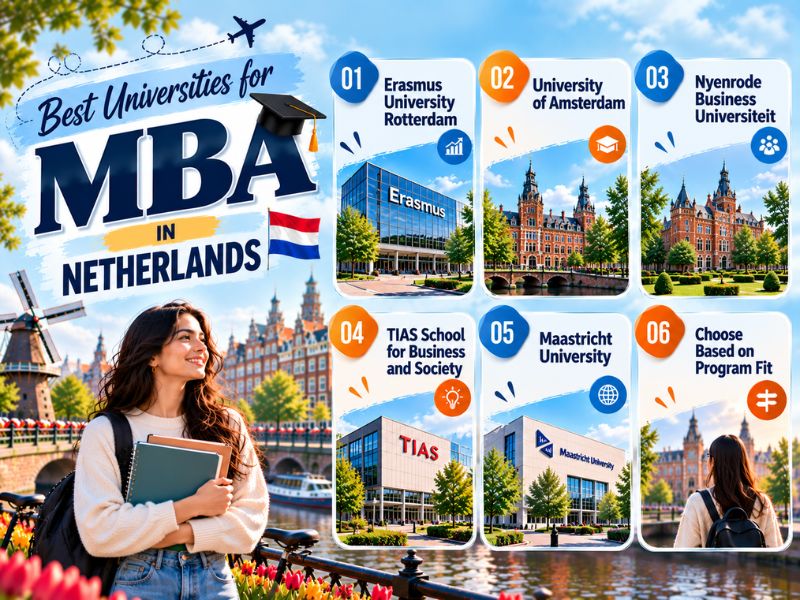
Erasmus University Rotterdam
A strong choice for students seeking international business exposure, leadership development and access to Rotterdam’s corporate ecosystem.
University of Amsterdam
Suitable for students interested in management, finance, strategy and business education in Amsterdam.
Nyenrode Business Universiteit
Known for leadership, entrepreneurship and strong connections with companies and senior professionals.
TIAS School for Business and Society
A good option for working professionals looking for practical management education and executive development.
Maastricht University business ecosystem
Students can also explore internationally oriented business and management programs connected with Maastricht.
Choose based on program fit
Students should compare tuition, program duration, admissions criteria, career support, international exposure and specialisation options before making a final decision.
Bilkul — same style, same depth aur without resource links:
MBA Fees in Netherlands for International Students
MBA tuition fees in the Netherlands vary depending on the university, business school, program type and duration.
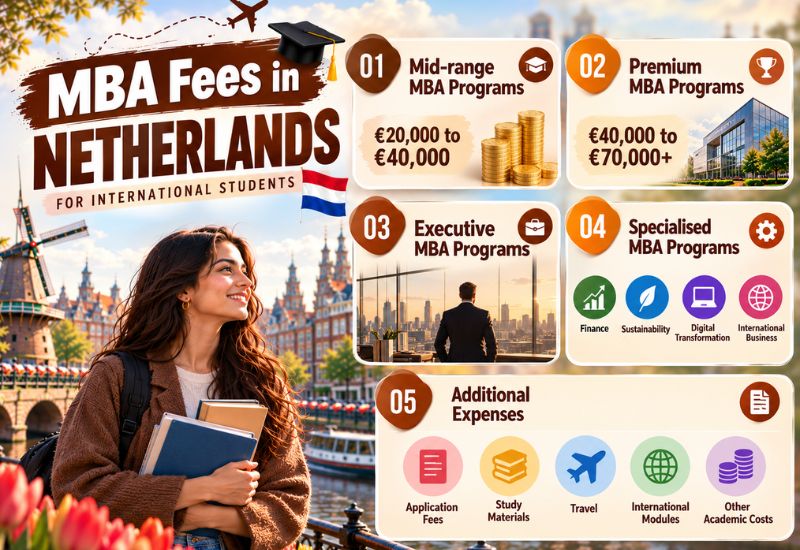
Mid-range MBA programs
Many MBA programs may cost around €20,000 to €40,000 for the complete course.
Premium MBA programs
Top-ranked or internationally recognised MBA programs can cost approximately €40,000 to €70,000 or more.
Executive MBA programs
Executive MBA courses are often more expensive because they target experienced professionals and include advanced leadership training.
Specialised MBA programs
Programs in Finance, Sustainability, Digital Transformation or International Business may have different fee structures.
Additional expenses
Students should also consider application fees, study materials, travel, international modules and other academic costs.
Cost of Living in the Netherlands for MBA Students
Living costs in the Netherlands depend mainly on the city, accommodation type and individual lifestyle.
Average monthly expenses
International students may need around €1,200 to €1,800 per month for accommodation, food, transport and personal expenses.
Accommodation
Housing is usually the largest expense, particularly in Amsterdam, Rotterdam, Utrecht and other major cities.
Food and groceries
Students may spend approximately €250 to €400 per month depending on eating habits and lifestyle.
Transportation
Cycling is widely used and can reduce travel expenses, while trains, buses and trams provide good public transport connectivity.
Insurance and personal expenses
Students should also budget for health insurance where applicable, mobile plans, study materials and leisure activities.
Affordable MBA Colleges in Netherlands
Students looking for a more affordable MBA should compare tuition fees, living costs, program duration and career outcomes.
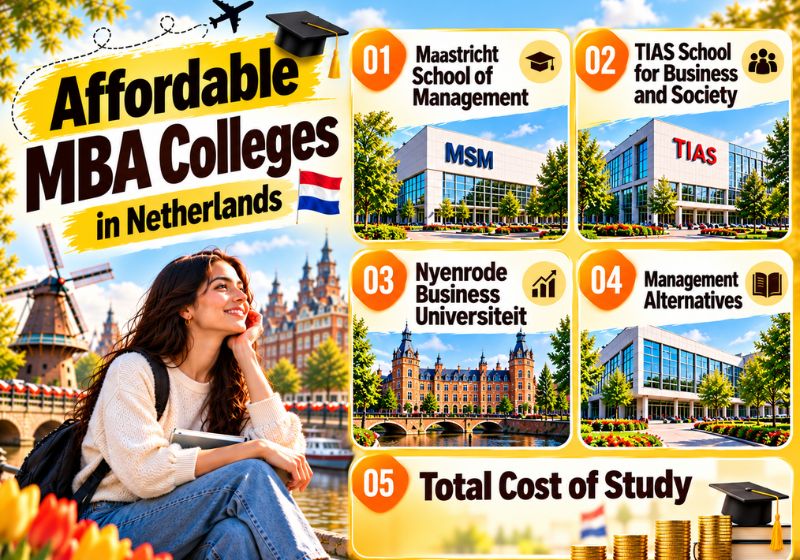
Maastricht School of Management
MSM has traditionally offered internationally oriented management programs with costs below some premium Dutch MBA schools.
TIAS School for Business and Society
TIAS offers professional management and executive programs that may provide a balance between cost and business exposure.
Nyenrode Business Universiteit
Nyenrode offers strong corporate-oriented education, although students should compare the total program cost carefully.
Other management alternatives
International students can also consider specialised Master's programs in Management, Finance or International Business if a full MBA exceeds their budget.
Consider total cost of study
A university with lower tuition may still be expensive if accommodation and living costs in the city are high.
MBA Scholarships in Netherlands for International Students
International MBA students can explore merit-based scholarships, leadership awards and university-specific financial support.
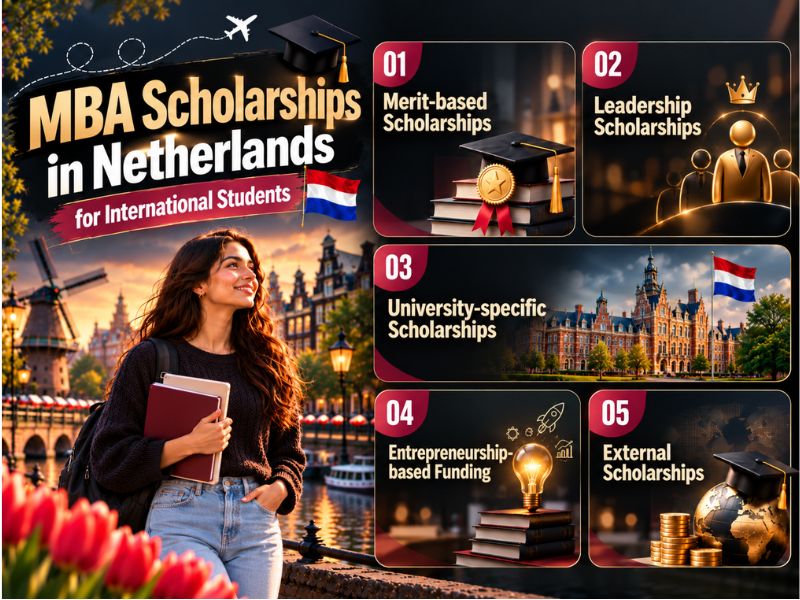
Merit-based scholarships
Business schools may provide partial tuition reductions to applicants with strong academic and professional profiles.
Leadership scholarships
Candidates with significant management experience, leadership achievements or career progression may qualify for selected awards.
University-specific scholarships
Some Dutch universities and business schools offer scholarships specifically for international students.
Entrepreneurship-based funding
Certain institutions may consider applicants with startup experience, innovation projects or entrepreneurial achievements.
External scholarships
Students can also explore government schemes, foundations, employer sponsorship and international funding organisations.
Scholarships are competitive
Strong academics, professional achievements and a well-prepared application can improve the chances of receiving financial assistance.
Popular MBA Specialisations in the Netherlands
MBA programs in the Netherlands offer specialisations aligned with the country's international and innovation-focused economy.
General Management
Covers leadership, strategy, finance, marketing and organisational management.
International Business
Focuses on global strategy, cross-border business operations and international market development.
Finance
Includes corporate finance, investment, financial strategy and managerial decision-making.
Digital Transformation
Covers technology strategy, digital business models, innovation and organisational change.
Sustainability Management
Focuses on ESG, sustainable business models, responsible leadership and environmental strategy.
Entrepreneurship and Innovation
Suitable for students interested in startups, new ventures, innovation management and business growth.
Supply Chain and Logistics
A relevant specialisation because of the Netherlands' strong logistics, trade and transportation ecosystem.
Business Analytics
Combines management with data analysis, business intelligence and data-driven decision-making.
Bilkul — same style, same depth aur without resource links:
MBA Syllabus and Subjects in the Netherlands
MBA programs in the Netherlands generally combine core management subjects with leadership, innovation, sustainability and international business.
Strategic Management
Students learn competitive strategy, business planning, market positioning and long-term organisational decision-making.
Financial Management
Covers corporate finance, budgeting, investment decisions, financial analysis and business valuation.
Marketing Management
Includes consumer behaviour, branding, digital marketing, market research and sales strategy.
Leadership and Organisational Behaviour
Focuses on leadership styles, team management, organisational culture and employee motivation.
Operations and Supply Chain Management
Covers logistics, procurement, process improvement, supply-chain strategy and operational efficiency.
Business Analytics
Students learn how to use data, business intelligence and analytical methods for managerial decision-making.
Entrepreneurship and Innovation
Covers startup development, innovation strategy, business models and new venture creation.
Sustainability and Responsible Business
Many Dutch MBA programs include ESG, sustainable strategy, ethics and responsible leadership.
MBA Placements and Job Opportunities in the Netherlands
MBA graduates in the Netherlands can explore opportunities across consulting, finance, technology, logistics, consumer goods and international business.
Consulting
Graduates can pursue roles in strategy consulting, management consulting, business transformation and advisory services.
Finance and Banking
Career options include corporate finance, financial analysis, banking, risk management and investment-related roles.
Technology and Digital Business
The Netherlands offers opportunities in product management, digital transformation, technology strategy and business development.
Supply Chain and Logistics
The country's strong trade and logistics ecosystem creates demand for professionals in operations, procurement and supply-chain management.
Marketing and International Business
MBA graduates can work in brand management, international sales, business development and market expansion.
Career support from business schools
Many institutions provide career coaching, networking opportunities, employer events and alumni connections rather than traditional India-style campus placements.
Average MBA Salary in the Netherlands
MBA salaries in the Netherlands depend on professional experience, industry, employer, job function and location.
Entry and mid-level management roles
Graduates may commonly target around €50,000–€70,000 per year depending on their experience and responsibilities.
Experienced MBA professionals
Candidates with significant prior work experience may earn approximately €70,000–€90,000 or more annually.
Senior and specialised roles
Professionals working in consulting, finance, technology or senior management may earn €90,000–€100,000+ per year.
Industry influences salary
Technology, consulting, finance and specialised management roles may offer higher compensation than some general management positions.
Prior experience matters
Work experience before the MBA, leadership exposure and specialised skills can strongly influence salary outcomes.
Top Recruiters After MBA in the Netherlands
The Netherlands hosts numerous multinational employers that recruit business and management professionals.
Consulting firms
Deloitte, PwC, EY and KPMG offer opportunities in consulting, strategy, transformation and advisory.
Financial institutions
ING and ABN AMRO are major Dutch financial organisations offering roles in banking, finance, risk and strategy.
Technology companies
Technology and digital businesses recruit MBA graduates for product management, strategy, operations and commercial roles.
Consumer and industrial companies
Companies such as Unilever and Philips offer opportunities across marketing, finance, operations and business development.
Logistics companies
The Netherlands' position as a European logistics hub creates opportunities in transportation, supply chain and global operations.
Startups and scale-ups
Amsterdam, Rotterdam and other cities also provide opportunities in entrepreneurship, fintech, technology and innovative businesses.
Post-Study Work Opportunities in the Netherlands
The Netherlands provides an important post-study pathway for eligible international graduates who want to search for employment after completing their studies.
Orientation Year
Eligible graduates can apply for the Dutch Orientation Year permit, commonly known as the zoekjaar.
Up to 12 months
The Orientation Year generally allows eligible graduates to remain in the Netherlands for up to one year to search for work or start a business.
Flexible employment during the period
Graduates with a valid Orientation Year permit generally have greater flexibility to work while searching for longer-term employment.
Highly skilled migrant pathway
After finding suitable employment, graduates may be able to transition to a highly skilled migrant or another appropriate residence status.
Entrepreneurship opportunities
The Orientation Year can also provide time for eligible graduates interested in establishing a business.
Dutch-language skills can help
English is widely used in international companies, but Dutch proficiency can increase access to local employers and customer-facing roles.
FAQs About MBA in the Netherlands for International Students
Is the Netherlands good for an MBA?
Yes. The Netherlands offers internationally oriented business schools, English-taught MBA programs and access to a strong European business environment.
How long is an MBA in the Netherlands?
Many full-time MBA programs can be completed in around one year, although duration varies by institution.
Is GMAT required for an MBA in the Netherlands?
Not always. Some business schools require GMAT or GRE, while others provide alternative assessments or possible waivers.
Do I need work experience?
Many leading MBA programs prefer or require professional experience, commonly around 3 years or more.
Can I study an MBA in English?
Yes. Many Dutch MBA programs are taught completely in English.
What is the average MBA salary in the Netherlands?
Depending on experience and job profile, graduates may earn approximately €50,000–€90,000+ annually.
Can international students work after an MBA?
Eligible graduates can generally apply for the 12-month Orientation Year to search for employment or establish a business.
Conclusion
The Netherlands can be an attractive MBA destination for international students seeking quality business education, European career exposure and an innovation-driven learning environment.
Strong international business ecosystem
Students gain exposure to multinational companies, financial institutions, consulting firms and technology businesses.
Wide range of career opportunities
MBA graduates can pursue careers in Consulting, Finance, Technology, Logistics, Marketing and International Business.
English-friendly environment
English-taught education and widespread professional use of English make the Netherlands accessible to international students.
Focus on innovation and sustainability
Dutch business education is particularly strong in entrepreneurship, digital transformation and responsible business.
Post-study opportunities add value
The Orientation Year provides eligible graduates with additional time to explore employment and entrepreneurship opportunities after completing their studies.