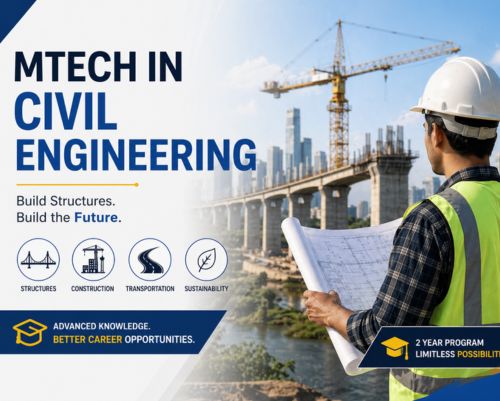
MTech in Civil Engineering is a 2-year postgraduate degree that focuses on advanced concepts in infrastructure, construction, and engineering design. It is designed for students seeking specialised knowledge and technical expertise beyond their undergraduate studies.
This program helps you move from basic engineering roles to high-level positions in design, planning, and project management.
What You Will Learn
-
Structural design and analysis
-
Soil mechanics and foundation engineering
-
Transportation and highway engineering
-
Environmental and sustainable engineering
-
Construction planning and project management
-
Advanced software tools like AutoCAD and STAAD Pro
Key Insights
-
MTech = advanced learning + specialization
-
Focus on real-world engineering problems
-
Essential for senior roles and career growth
MTech in Civil Engineering is ideal for students who want to build expertise, increase salary potential, and grow into leadership roles in the engineering field.
Top Civil Engineering Colleges in India (2026)
Choosing the right college is one of the most important decisions for your civil engineering career. A good college not only provides quality education but also gives you better placements, industry exposure, and practical learning opportunities.
Top institutes in India are known for their strong faculty, advanced labs, research facilities, and industry collaborations, which help students become job-ready
Top Government Colleges
-
Indian Institute of Technology Bombay
One of the best engineering institutes in India, known for advanced research, high-quality faculty, and excellent placement opportunities in core engineering sectors.
-
Indian Institute of Technology Delhi
Offers strong academic programs with a focus on innovation, design, and real-world engineering challenges.
-
Indian Institute of Technology Madras
Highly reputed for civil engineering, especially in structural and environmental engineering research.
-
National Institute of Technology Trichy
One of the top NITs with strong placement records, affordable fees, and excellent infrastructure.
-
Indian Institute of Technology Kharagpur
Known for its legacy, large campus, and strong civil engineering department.
Top Private Colleges
-
Vellore Institute of Technology
Popular for its modern infrastructure, industry-focused curriculum, and good placement opportunities.
-
SRM Institute of Science and Technology
Offers strong exposure to practical learning, internships, and global collaborations.
-
Manipal Institute of Technology
Known for hands-on learning, a strong alumni network, and consistent placement performance.
Key Insights
-
IITs = top-tier education + highest placements
-
NITs = best ROI + strong core engineering focus
-
Private colleges = good infrastructure + industry exposure
-
College reputation = a major factor in job opportunities
If possible, aim for IITs or NITs for maximum career benefits. However, with the right skills, even private colleges can lead to successful careers in civil engineering.
Top Civil Engineering Specialisations (2026)
Choosing the right specialisation in civil engineering is crucial because it directly affects your career path, job opportunities, and salary growth. Each specialisation focuses on a different aspect of infrastructure and development.
Popular Specializations
-
Structural Engineering
Focuses on designing buildings, bridges, and structures.
👉 One of the highest-demand and highest-paying fields.
-
Geotechnical Engineering
Deals with soil, foundation, and underground construction.
👉 Essential for large infrastructure projects.
-
Transportation Engineering
Focuses on roads, highways, railways, and traffic systems.
👉 Growing rapidly due to smart city development.
-
Environmental Engineering
Focuses on sustainability, waste management, and pollution control.
👉 High demand due to global environmental concerns.
-
Construction Management
Combines engineering with management skills.
👉 Ideal for leadership roles like a project manager.
-
Water Resources Engineering
Deals with water supply, irrigation, and flood management.
👉 Important for sustainable development projects.
Key Insights
-
Structural + Construction = top career opportunities
-
Environmental = future-focused specialization
-
Transportation = growing with urban development
-
Choose based on interest + long-term demand
Your specialisation defines your future. Choose a field that matches your skills, interests, and industry demand to maximise career success.
1. Is MTech in Civil Engineering Worth It in 2026? (ROI Analysis)
The value of an MTech in Civil Engineering depends on one key factor: return on investment (ROI). In 2026, with rapid infrastructure growth and smart city projects, the demand for skilled civil engineers is steadily increasing.
ROI Breakdown
-
Low Cost (Govt Colleges): ₹50,000 – ₹2 Lakhs
-
Average Starting Salary: ₹4 – ₹8 LPA
-
Long-Term Salary: ₹10 – ₹20 LPA+
👉 This makes MTech a high ROI degree, especially if completed from a reputed college.
Key Insights
-
Government colleges = best ROI
-
MTech = higher salary + better roles
-
Demand driven by infrastructure and urban development
Yes, MTech in Civil Engineering is worth it in 2026, especially if you aim for specialisation and long-term career growth.
2. GATE Requirement for MTech Civil Engineering – Do You Need It?
GATE (Graduate Aptitude Test in Engineering) is the main entrance exam for MTech admissions in India.
Do You Need GATE?
-
Yes (For Top Colleges): IITs, NITs, and government institutes
-
Not Always (Private Colleges): Some private universities offer direct admission
Why GATE is Important
-
Required for top-ranked institutes
-
Helps you get scholarships/stipends
-
Improves your career opportunities
Key Insights (Ahrefs Style)
-
GATE = gateway to top colleges
-
High score = better college + better placement
-
Optional for private colleges, but recommended
If you want the best colleges and the highest ROI, clearing GATE is highly recommended.
3. Latest Trends in Civil Engineering (2026 Future Scope)
Civil engineering is evolving with technology and sustainability. Understanding these trends can help you choose the right specialisation and stay ahead.
Top Trends in 2026
-
Smart Cities Development
Integration of IoT and data systems into urban infrastructure.
-
Sustainable Construction
Use of eco-friendly materials and energy-efficient designs.
-
Green Buildings
Focus on reducing environmental impact and energy consumption.
-
AI and Automation in Construction
Improved project planning, safety, and efficiency.
-
Advanced Materials Technology
Stronger, lighter, and more durable construction materials.
Key Insights
-
Future = tech-driven + sustainable engineering
-
AI + automation = increasing efficiency
-
Green construction = global priority
Civil engineering is becoming smarter, greener, and more technology-driven, creating exciting future opportunities.
4. Expert Tips to Build a Successful Career in Civil Engineering
Success in civil engineering depends on skills, strategy, and continuous learning.
Proven Expert Tips
-
Focus on Core Concepts
Strong fundamentals are essential for long-term success.
-
Learn Industry Software
Tools like AutoCAD, STAAD Pro, and BIM are highly valuable.
-
Gain Practical Experience
Internships and site work improve your real-world understanding.
-
Choose the Right Specialisation
Align your specialisation with market demand and personal interest.
-
Stay Updated with Trends
Keep learning about new technologies and industry changes.
Key Insights
-
Skills > degree in long-term
-
Practical experience = career growth
-
Continuous learning = competitive advantage
A successful career in civil engineering requires more than a degree—it needs skills, experience, and smart career decisions.
Why Choose MTech in Civil Engineering?
If you want to move beyond entry-level roles and build a high-impact engineering career, an MTech in Civil Engineering is a smart next step. It equips you with specialised skills, deeper technical knowledge, and better career opportunities in the infrastructure sector.
Key Benefits
Higher Salary Compared to BTech
MTech graduates often get access to better-paying roles and faster career growth.